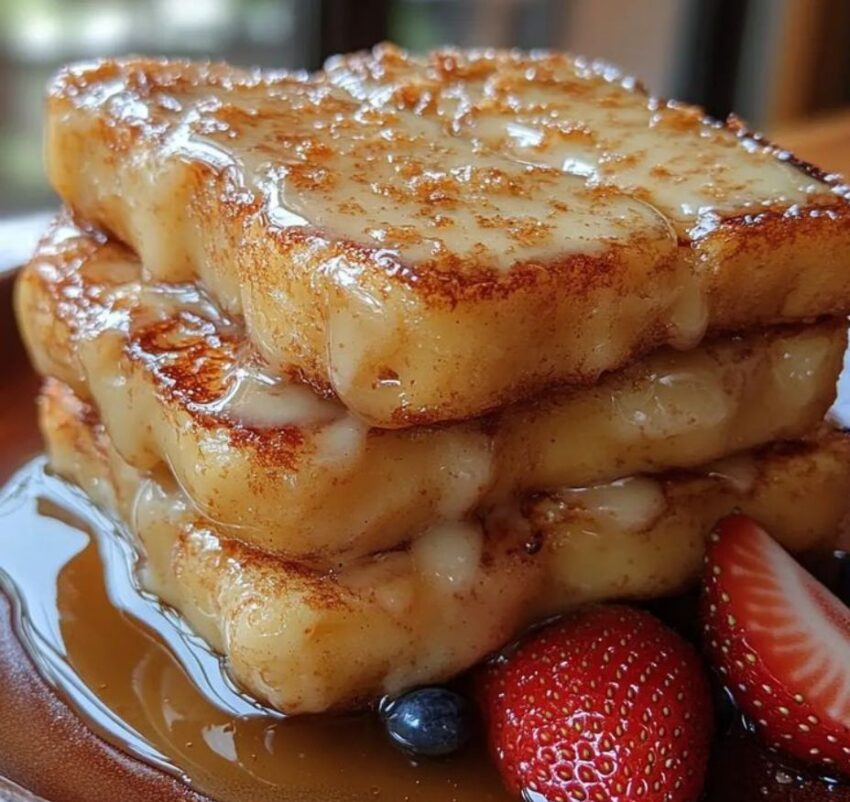
This Creamy Custard French Toast recipe creates golden, buttery slices soaked in a rich vanilla custard mixture crisp on the outside, soft and creamy on the inside. A breakfast classic elevated to pure indulgence.
Creamy Custard French Toast
There’s something magical about French toast — the way simple ingredients like bread, eggs, and milk come together to create a dish that feels both comforting and luxurious. But this isn’t your average French toast — this is Creamy Custard French Toast, where each slice is soaked in a rich, velvety custard mixture that transforms every bite into a melt-in-your-mouth experience.
The secret to this recipe lies in the custard base — a luscious blend of cream, milk, eggs, vanilla, and a touch of sweetness. As the bread absorbs the custard, it becomes creamy on the inside while the exterior turns golden and slightly crisp when cooked.
Perfect for weekend brunches, holiday breakfasts, or when you want to treat yourself to something extraordinary, this recipe turns an everyday breakfast into something elegant and unforgettable.
Table of Contents
-
Ingredients
-
Choosing the Best Bread
-
Step-by-Step Directions
-
Tips for Perfect Custard French Toast
-
Variations
-
Serving Suggestions
-
Make-Ahead and Storage Tips
-
Frequently Asked Questions
-
Nutritional Information
-
Final Thoughts
Ingredients
For the Custard Mixture:
-
4 large eggs
-
¾ cup heavy cream (or half-and-half for lighter texture)
-
¾ cup whole milk
-
3 tablespoons granulated sugar
-
1 tablespoon vanilla extract
-
½ teaspoon ground cinnamon
-
Pinch of salt
For the Toast:
-
8 thick slices of brioche or challah bread (see bread guide below)
-
2 tablespoons unsalted butter (for frying)
-
1 tablespoon vegetable oil (prevents burning)
Optional Toppings:
-
Powdered sugar
-
Maple syrup or honey
-
Fresh berries (strawberries, blueberries, or raspberries)
-
Whipped cream
-
A sprinkle of cinnamon or nutmeg
Choosing the Best Bread
The bread you use makes a huge difference. For creamy custard French toast, you need bread that is soft yet sturdy enough to soak up the custard without falling apart.
Here are the top choices:
-
Brioche: Buttery, rich, and soft — the best option for luxurious French toast.
-
Challah: Slightly sweet with a beautiful crumb that absorbs custard perfectly.
-
Texas Toast or Thick White Bread: A classic choice for a traditional diner-style version.
-
Croissant or Baguette (for a twist): Use day-old croissants for a buttery, flaky take.
Pro Tip: Day-old bread works best. Slightly stale bread soaks up custard without becoming soggy.
Step-by-Step Directions
Step 1: Prepare the Custard Mixture
-
In a large mixing bowl, whisk together eggs, heavy cream, milk, sugar, vanilla extract, cinnamon, and salt until smooth and creamy.
-
Make sure the sugar is completely dissolved and the mixture has a pale yellow, velvety texture.
Tip: Don’t overbeat — too much air will create bubbles and change the custard texture.
Step 2: Soak the Bread
-
Pour the custard mixture into a shallow dish large enough to hold several slices of bread.
-
Dip each slice into the custard, letting it soak for 20–30 seconds per side (depending on thickness).
-
The bread should be moist but not falling apart.
Pro Tip: For extra creaminess, let the slices rest on a wire rack for a minute after soaking to allow the custard to penetrate evenly.
Step 3: Cook the French Toast
-
Heat a large skillet or griddle over medium heat.
-
Add 1 tablespoon butter and ½ tablespoon oil to prevent the butter from burning.
-
Once melted, place soaked bread slices onto the pan.
-
Cook for 3–4 minutes per side, or until each slice is golden brown with a slightly crisp edge.
Repeat with the remaining slices, adding more butter and oil as needed.
Note: Avoid crowding the pan; this ensures even cooking and perfect browning.
Step 4: Serve Warm
Transfer the French toast to a serving platter and dust with powdered sugar.
Drizzle with maple syrup, top with fresh berries, and a dollop of whipped cream for an indulgent breakfast that looks straight out of a café.
Tips for Perfect Custard French Toast
-
Use thick, sturdy bread: Thin or overly soft bread can fall apart.
-
Balance milk and cream: Too much milk can make the custard watery; cream adds richness.
-
Cook on medium heat: High heat can burn the outside before the inside cooks.
-
Let the bread soak: Give it enough time to absorb the custard fully — that’s the secret to creaminess.
-
Don’t rush flipping: Wait until the first side is fully golden before turning.
-
Serve immediately: French toast tastes best right off the skillet when the exterior is crisp.
Variations
1. Stuffed Custard French Toast
Add a layer of cream cheese and strawberry jam between two slices before dipping them in custard for a decadent stuffed version.
2. Caramelized French Toast
Sprinkle a little sugar on each side before cooking — it caramelizes beautifully for a sweet, crispy crust.
3. Coconut Custard French Toast
Replace half the milk with coconut milk and sprinkle with shredded coconut for a tropical twist.
4. Chocolate Hazelnut French Toast
Spread Nutella between two slices, dip in custard, and cook for a dessert-style breakfast.
5. Oven-Baked Version
Arrange soaked bread slices on a parchment-lined baking sheet and bake at 375°F (190°C) for 20–25 minutes, flipping halfway through for a lighter, hands-free option.
Serving Suggestions
Serve your Creamy Custard French Toast with:
-
Fresh fruit: Strawberries, blueberries, raspberries, or sliced bananas add natural sweetness.
-
Whipped cream or yogurt: Balances the richness of the custard.
-
Syrups: Maple syrup, caramel sauce, or honey drizzle.
-
Savory twist: Top with crispy bacon or sausage for a sweet-and-savory brunch combo.
Serving Idea: Stack slices, drizzle with warm maple syrup, top with a pat of butter, and garnish with fresh berries for a presentation-worthy breakfast.
Make-Ahead and Storage Tips
To Make Ahead:
-
Prepare the custard up to 24 hours in advance and store it covered in the fridge.
-
Soak and cook the bread fresh for best results.
To Store Leftovers:
-
Refrigerate cooked French toast in an airtight container for up to 3 days.
-
Reheat in a toaster oven or skillet for 3–4 minutes on each side — avoid the microwave to keep it crisp.
To Freeze:
-
Place cooled slices on a baking sheet and freeze for 2 hours.
-
Transfer to a freezer bag; they keep well for up to 2 months.
-
Reheat in the toaster or oven until warm and crisp.
Frequently Asked Questions
1. Can I use non-dairy milk?
Yes! Almond, oat, or coconut milk works well — though the flavor will slightly change.
2. Why is my French toast soggy?
Either the bread was too thin or soaked too long, or the heat was too low. Aim for medium heat and firm bread.
3. Can I make this gluten-free?
Absolutely — use gluten-free brioche or sandwich bread. The custard will taste just as rich.
4. Is it safe to make custard with raw eggs?
Yes — the eggs cook fully when the toast is fried or baked, ensuring safety.
5. How do I make it restaurant-style?
Use day-old brioche, cook in butter and oil, and finish with a light dusting of powdered sugar and warm syrup drizzle.
Nutritional Information (Per Serving – 1 Slice)
| Nutrient | Amount (Approx.) |
|---|---|
| Calories | 210 kcal |
| Protein | 7 g |
| Fat | 10 g |
| Carbohydrates | 22 g |
| Fiber | 1 g |
| Sugar | 6 g |
| Sodium | 180 mg |
Note: Nutritional values may vary based on bread type and toppings used.
Final Thoughts
This Creamy Custard French Toast isn’t just breakfast — it’s a comforting indulgence that feels like a warm hug on a plate. The custard base creates a luscious texture inside, while the golden exterior adds that perfect crisp contrast.
It’s a simple recipe, yet elegant enough to serve at a brunch, holiday morning, or even as a dessert with a scoop of vanilla ice cream. Once you try this version, you’ll never go back to ordinary French toast again.
Whether topped with berries, drizzled with maple syrup, or dusted with powdered sugar, this recipe will quickly become a family favorite. So grab your whisk, warm your skillet, and prepare to fall in love with every creamy, custardy bite.