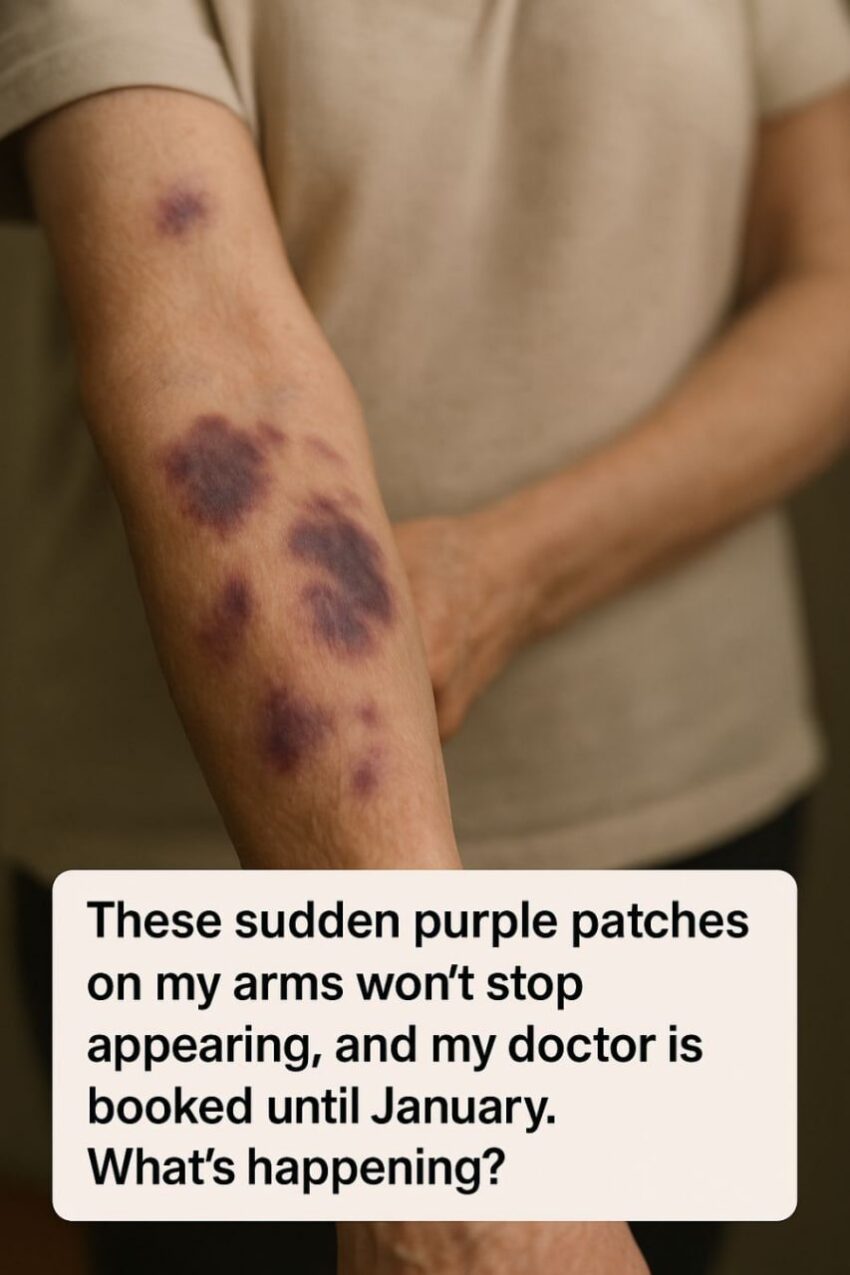
I understand your concern—sudden purple patches on the skin can be alarming, especially when they keep appearing. While I can’t diagnose you without an in-person exam, I can explain possible causes and what to do until you can see your doctor.
Possible Causes of Purple Patches
- Bruising / Trauma
- Even minor bumps you don’t remember can cause purple or red patches.
- Common if you take blood thinners or have clotting issues.
- Petechiae or Purpura
- Small red or purple spots caused by bleeding under the skin.
- Can be associated with low platelets, infections, or blood disorders.
- Vascular Issues
- Conditions affecting blood vessels can cause purple patches.
- Examples: vasculitis (inflammation of blood vessels) or capillary fragility.
- Medication Side Effects
- Blood thinners, steroids, or certain antibiotics can cause bruising or purple spots.
- Underlying Medical Conditions
- Blood disorders like anemia, clotting disorders, or immune conditions.
- Less commonly, liver disease or vitamin deficiencies (e.g., vitamin C or K).
When to Seek Care Immediately
Go to urgent care or the ER if you notice:
- Large or spreading bruises without injury
- Purple spots inside the mouth or eyes
- Bleeding gums or nosebleeds
- Weakness, fever, or feeling unwell
These could indicate a serious bleeding or blood disorder.
What You Can Do Now
- Document changes: Take photos of the patches daily.
- Avoid trauma: Be gentle with your arms to prevent new bruises.
- Check medications: Note any that might increase bleeding risk.
- Seek urgent care: If patches appear rapidly, or you notice any of the warning signs above.
Since your doctor isn’t available until January, it’s safest to get evaluated sooner if the patches keep appearing or worsen. A blood test and physical exam are usually needed to identify the cause.
